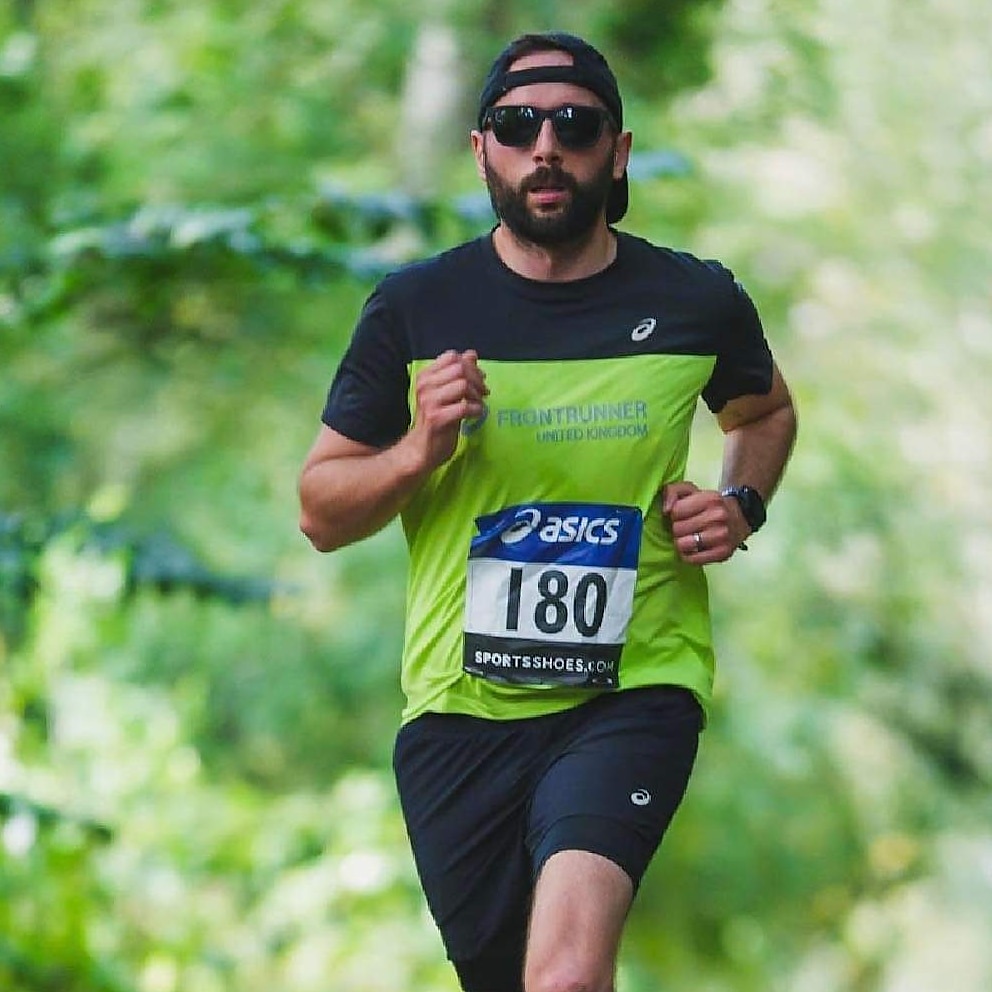
Sports psychology from a Clinical Psychologist who actually runs.
Most athletes searching for a sports psychologist are looking for someone who understands performance and the messier human stuff underneath it. That's what Third Wind is built for.
Clinical Psychologist. Endurance runner. Not a sports psychologist — and that's the point.
I'm Dr Neil Drew, a HCPC Registered Clinical Psychologist and endurance runner. I work with athletes who want more than mental-skills training — people whose questions sit somewhere between performance and being human.
Sports psychology, as a discipline, is excellent at motivation, imagery, arousal control and goal setting. But many of the athletes who come to Third Wind aren't stuck on technique. They're stuck on identity, burnout, self-worth, injury, perfectionism, or the quiet weight of always being the one who keeps going.
That territory needs clinical training. It needs evidence-based therapy models. And it needs someone who has felt what late-stage endurance actually asks of a person.
Why athletes choose a Clinical Psychologist over a sports psychologist.
Both roles matter. But the training is different, and it changes what's possible in the room.
Doctoral clinical training
Trained to doctoral level (DClinPsych) in the assessment and treatment of the full range of psychological difficulties — not only performance. Many sports psychologists are not trained to deliver formal psychological therapy.
HCPC Registered
A legally protected title in the UK. HCPC registration means regulated, accountable practice held to strict standards of ethics, evidence and continuing competence.
Evidence-based therapy models
Fluent in CBT, ACT, compassion-focused therapy, EMDR-informed work and psychodynamic thinking. Able to work with anxiety, low mood, trauma and identity — not just mental skills training.
Where performance meets mental health
Athlete struggles rarely stay neatly inside the performance box. Burnout, disordered eating, injury grief, identity collapse and perfectionism sit across performance and clinical territory.
Lived endurance experience
Thousands of miles across roads, trails, ultras and backyard events. I understand the culture, the language, the taper anxiety and the identity questions from the inside.
Coaching and therapy in one place
Sessions can flex between psychological coaching, structured therapy and reflective conversation — matched to what you actually need rather than a single fixed model.
Endurance athletes, high performers and the quietly exhausted.
If you'd normally reach for a sports psychologist but suspect what you're really carrying is bigger than mental skills, this is probably the right room.
- —Endurance runners, ultra runners and trail athletes
- —Triathletes, cyclists and swimmers
- —Neurodivergent athletes (ADHD, autism)
- —High performers in sport and life navigating burnout
- —Athletes returning from injury or long absence
- —Performance anxiety, self-doubt and pre-race nerves
- —Identity, retirement and life beyond the sport
- —Motivation, meaning and the long view
The athletes struggling the most are often the ones functioning best on the surface. Sports psychology sees the performance. Clinical psychology sees the person underneath it.
Sports psychology, clinical psychology & the overlap.
- What's the difference between a sports psychologist and a clinical psychologist?
- A sports psychologist typically trains in performance, motivation and mental skills for sport. A Clinical Psychologist trains to doctoral level in the assessment and treatment of the full range of psychological difficulties — anxiety, low mood, trauma, identity, burnout, neurodivergence — using evidence-based therapies like CBT, ACT, compassion-focused therapy and psychodynamic approaches. When your struggle sits between performance and mental health, a Clinical Psychologist can hold both.
- Can a Clinical Psychologist work with athletes?
- Yes. Clinical Psychologists are trained to work across the whole of life, including elite and amateur athletes. I combine HCPC-registered clinical training with years of endurance running so the work speaks both languages.
- Do you offer sports psychology for runners?
- Yes — endurance runners are my core work. Road, trail, ultra, backyard, triathlon and beyond. Common themes: performance anxiety, taper nerves, motivation dips, identity, burnout, injury and return to sport.
- Do you work online or in person?
- Both. In person in Poundbury, Dorset, and worldwide by video. Walk-and-talk and dynamic running therapy are available locally.
- Is this therapy or coaching?
- It can be either, and it can flex. Some athletes want structured psychological coaching. Others need something closer to therapy. Sessions are shaped around what you actually need, not a fixed model.
Ready to talk to a Clinical Psychologist who understands endurance?
Send an enquiry to see if working together feels like the right fit.